Sébastien Johnson

Bingo-Lingo
Date
Game Concept
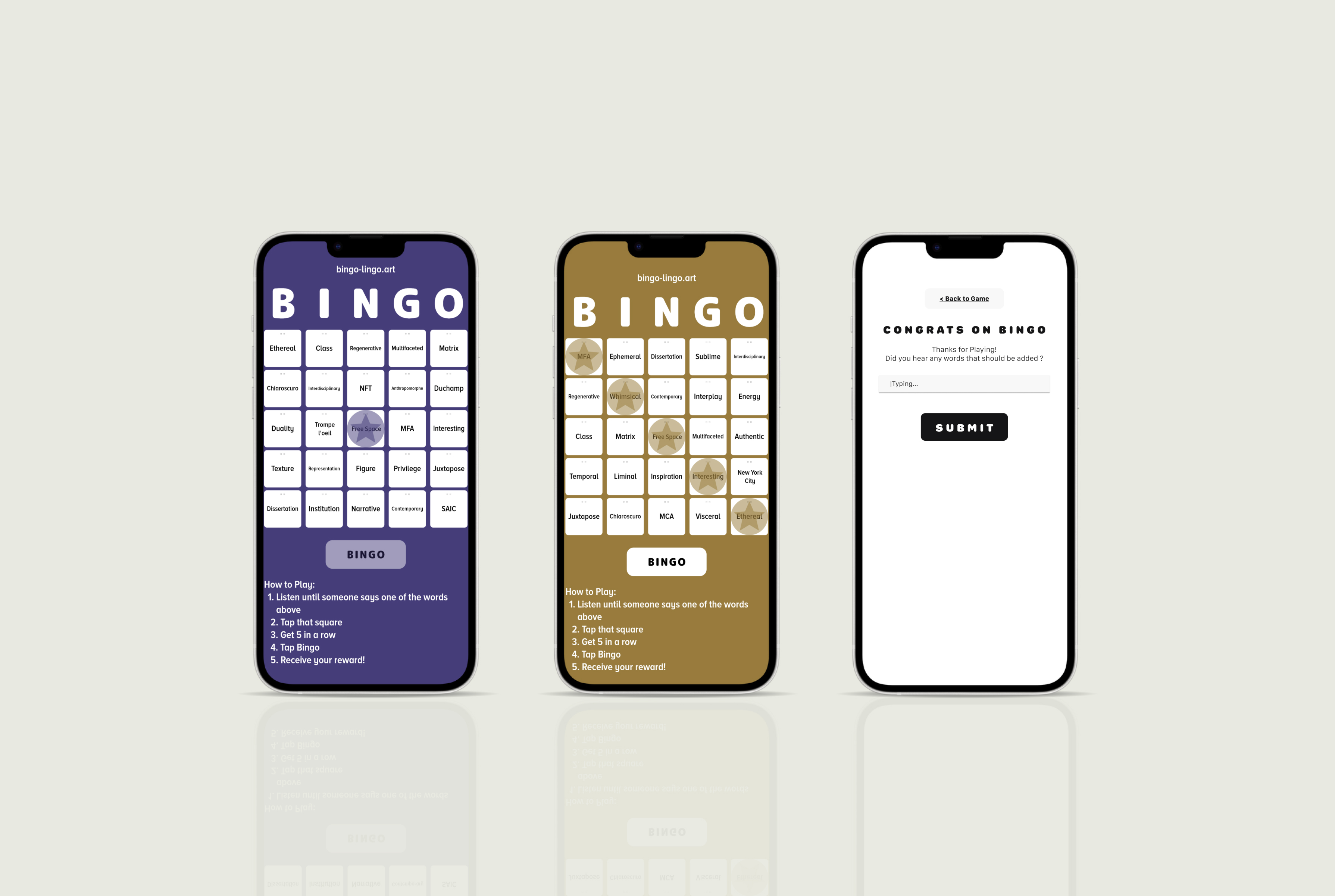
Players receive a randomized set of art-world words on their phones. Their task is to listen to conversations, read wall texts or reviews, and mark off words as they appear. When someone completes “bingo,” they can suggest new words to add into the mix, keeping the game fresh and community-driven.
Date
User Interaction
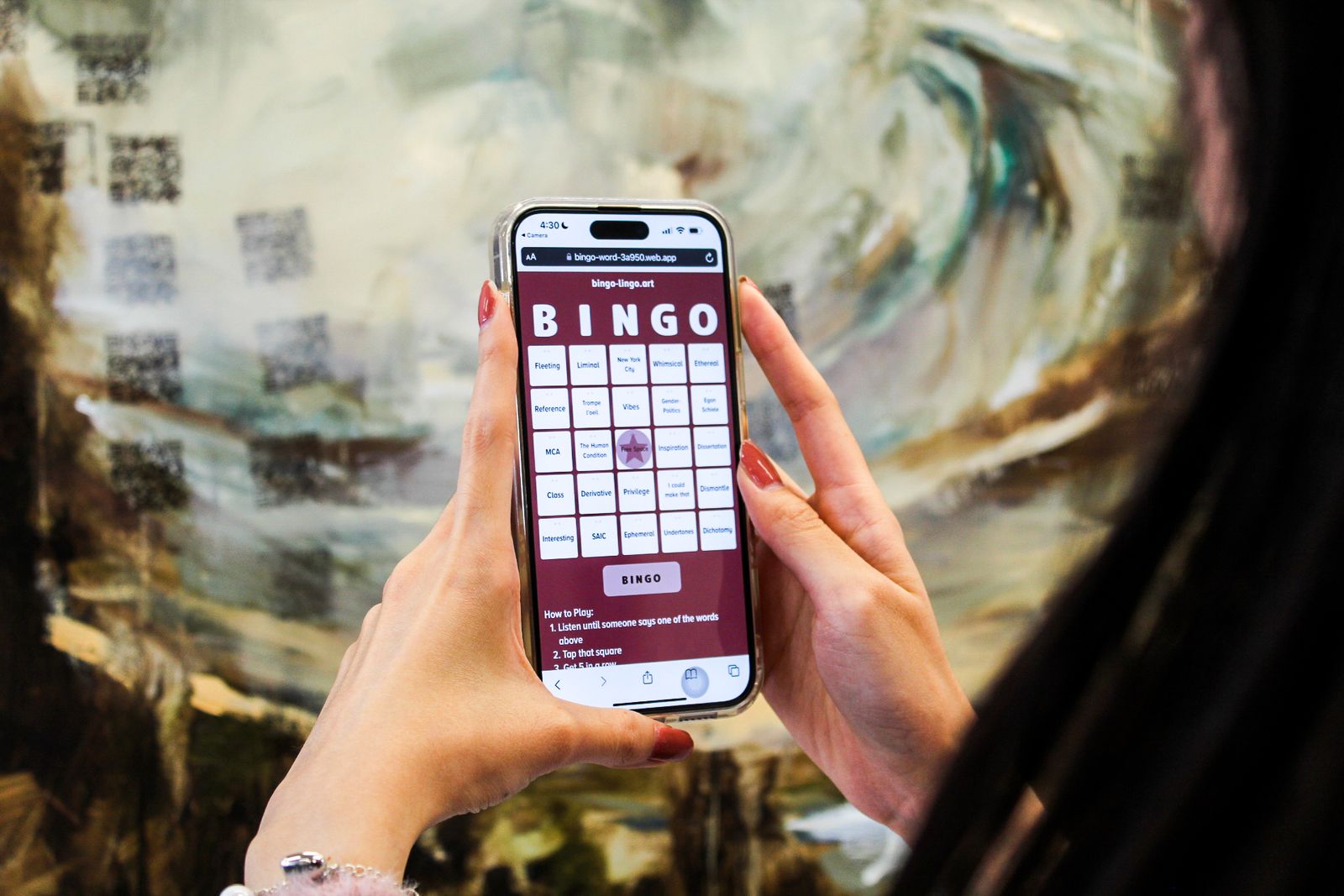
The game merges digital play with in-person engagement. By holding a phone in one hand and looking at art in the other, visitors weave jargon into their experience, laugh at its absurdity, and reflect on how speech shapes interpretation.
Date
Process
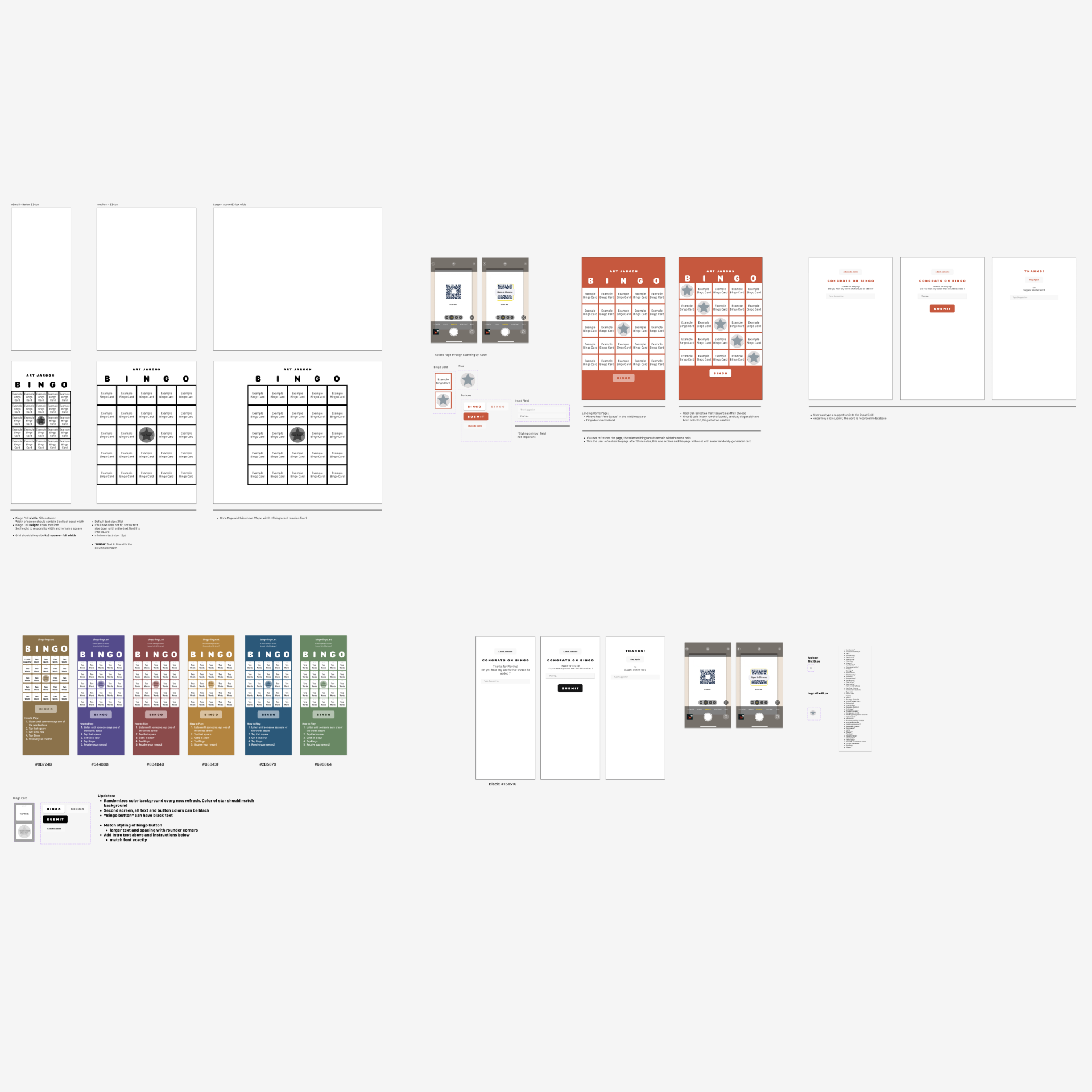
The project began with sketches and wireframes, followed by iterations of word card layouts and interaction flows. The prototype was built with Firebase for word storage, OpenAI for generating definitions and examples, and responsive UI design for mobile use.
Date
Gameplay
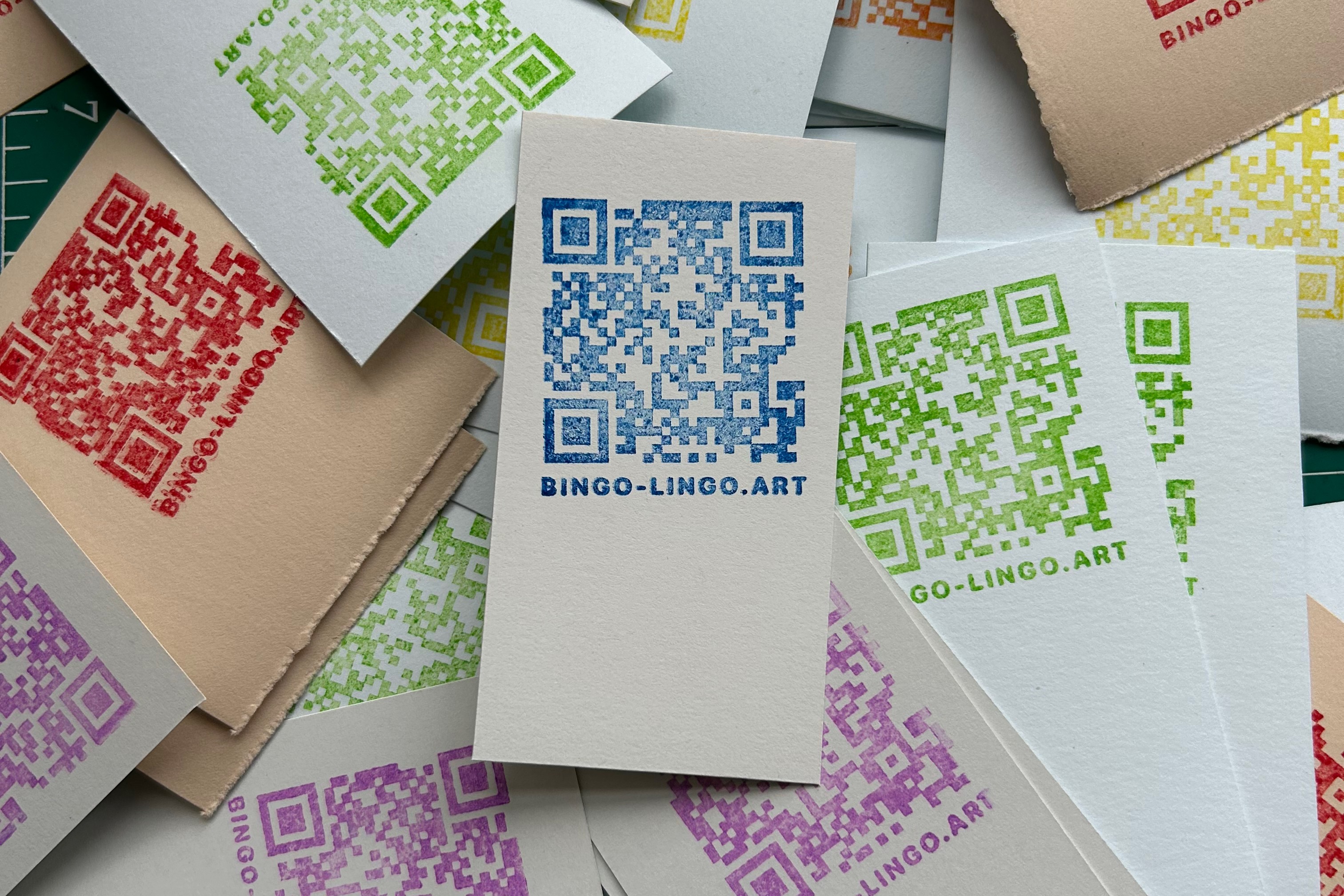
Gameplay begins with QR codes printed on colorful cards, discreetly left around the gallery bathrooms. Scanning a card launches the web app instantly—no downloads required. The cards act as playful entry points, transforming an ordinary moment into the start of the game and encouraging visitors to carry the experience back into the gallery.
Sébastien Johnson
Bingo-Lingo
Game Concept
Players receive a randomized set of art-world words on their phones. Their task is to listen to conversations, read wall texts or reviews, and mark off words as they appear. When someone completes “bingo,” they can suggest new words to add into the mix, keeping the game fresh and community-driven.
User Interaction
The game merges digital play with in-person engagement. By holding a phone in one hand and looking at art in the other, visitors weave jargon into their experience, laugh at its absurdity, and reflect on how speech shapes interpretation.
Process
The project began with sketches and wireframes, followed by iterations of word card layouts and interaction flows. The prototype was built with Firebase for word storage, OpenAI for generating definitions and examples, and responsive UI design for mobile use.
Gameplay
Gameplay begins with QR codes printed on colorful cards, discreetly left around the gallery bathrooms. Scanning a card launches the web app instantly—no downloads required. The cards act as playful entry points, transforming an ordinary moment into the start of the game and encouraging visitors to carry the experience back into the gallery.
Sébastien Johnson
Bingo-Lingo
Game Concept
Players receive a randomized set of art-world words on their phones. Their task is to listen to conversations, read wall texts or reviews, and mark off words as they appear. When someone completes “bingo,” they can suggest new words to add into the mix, keeping the game fresh and community-driven.
User Interaction
The game merges digital play with in-person engagement. By holding a phone in one hand and looking at art in the other, visitors weave jargon into their experience, laugh at its absurdity, and reflect on how speech shapes interpretation.
Process
The project began with sketches and wireframes, followed by iterations of word card layouts and interaction flows. The prototype was built with Firebase for word storage, OpenAI for generating definitions and examples, and responsive UI design for mobile use.
Gameplay
Gameplay begins with QR codes printed on colorful cards, discreetly left around the gallery bathrooms. Scanning a card launches the web app instantly—no downloads required. The cards act as playful entry points, transforming an ordinary moment into the start of the game and encouraging visitors to carry the experience back into the gallery.